The Tool and the Technique
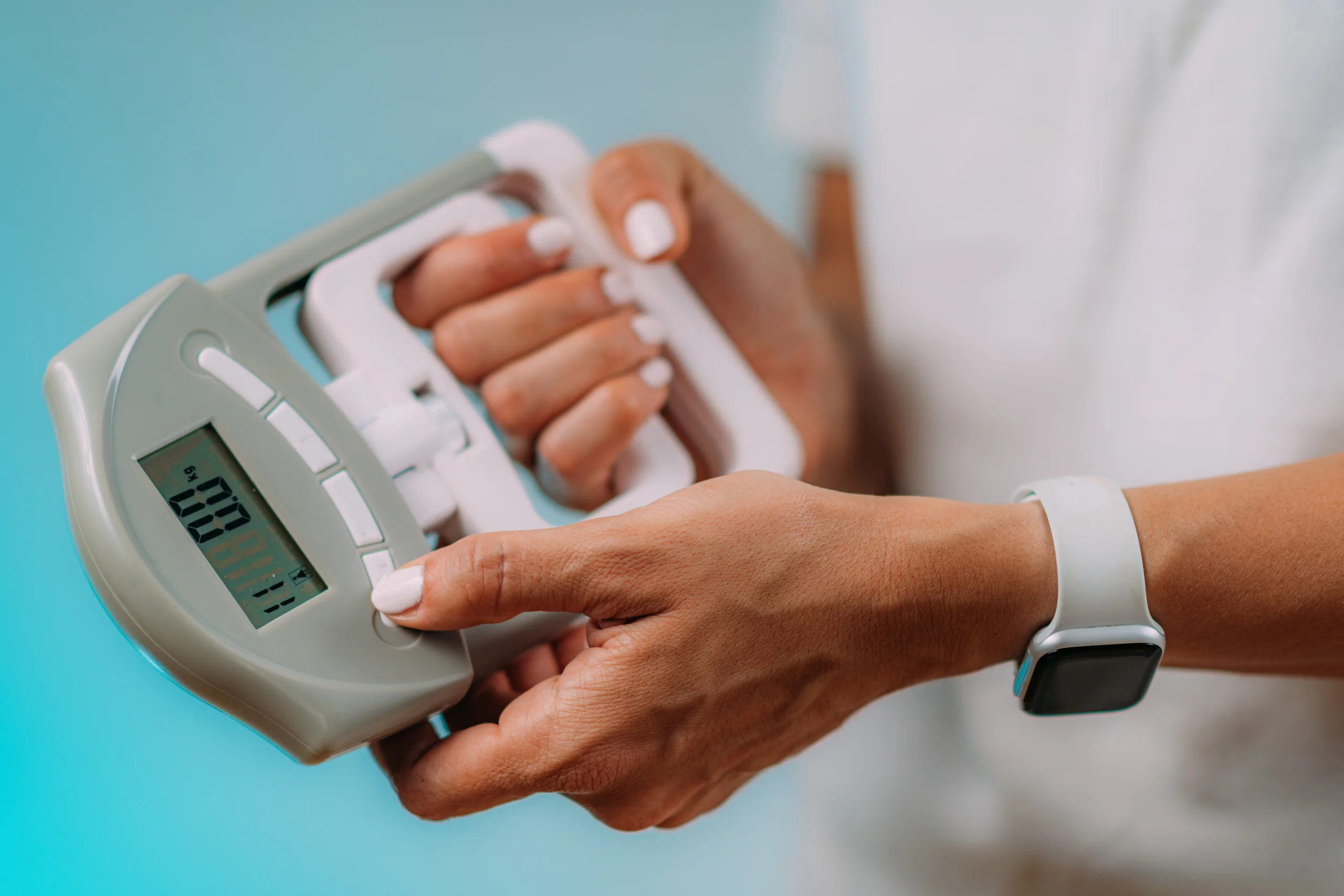
Measuring your grip strength is refreshingly simple, and the tool that researchers rely on is widely available to consumers for a modest price. It's called a hand dynamometer, a small device you squeeze that displays your force in kilograms or pounds. The hydraulic or spring-based, Jamar-style models are the ones used in clinical and research settings, and they're the closest you'll get to a study-grade reading at home.
The technique matters more than you might expect, because consistency is what makes your numbers trustworthy over time. Following the standardized testing approach used in research, sit in a chair with your back supported and your feet flat on the floor. Keep your shoulder relaxed and neutral, bend your elbow to about a 90-degree angle, and hold your forearm and wrist in a natural, straight position rather than cocked up or down. Then squeeze the dynamometer as hard as you comfortably can for about three to five seconds.
For a reliable result, test each hand three times with roughly a minute of rest between squeezes, and record your best effort. Many people note the highest of the three readings, and what really counts is using the same chair, posture, and device each time so you're comparing apples to apples. Testing both hands also lets you watch for any large gap between them, which can be worth mentioning to a clinician.
A quick word on shortcuts. You may have seen suggestions to squeeze a bathroom scale or a hand gripper to estimate your strength. These can be fun, but they aren't standardized and don't translate to the numbers in any reference chart, so they're best treated as casual curiosity rather than a real measurement. If you want a figure you can actually compare and track, a dynamometer is the way to go.